
Despite the heatwave striking most of the US, it was actually a pretty nice day on Saturday here in DC. It was so nice in fact that the group I had gathered to take to Christopher Nolan’s Oppenheimer were skittish about sitting down for a 3-hour historical biopic. Concerns such as “is this movie gonna be sad?” and “maybe we should have waited for streaming” arose (not from me of course, there’s nothing I like doing more on a nice day than going to the theater and getting sad). Leaving the theater, we were all reminded of why Nolan has the reputation he has and why you would take time out of your nice summer day to see something like this – put simply, it’s pretty damn good.

The first 20 minutes of this movie is a real spin cycle. We’re jumping to different points of time, the editing is moving at a breakneck pace, the sound is deafening, the colors and aspect ratios are changing, it’s all very disorienting. Nolan loves using this style, it doesn’t quite break into Baz Luhrmann territory, but it feels to me to be in the same tradition. In my opinion, Nolan is at his best when he slows himself down, I think sometimes he uses this style to mask problems with the script. You’re so disoriented by the visuals you don’t notice that the actual plot doesn’t really hold water (looking at you Tenet). In the case of Oppenheimer, however, this technique is used to great effect to create the sense of dread that really persists throughout the first 2 hours of the film.
By the time we get to the Trinity sequence (the real selling point of the movie, where we get to see the big bomb go boom), I was dreading the moment of the explosion so much I was actually scared. It felt like I was in a horror movie. The two hours of build-up to this moment, while not without some more lighthearted traditional biopic-esque moments, were largely there to put us in Oppenheimer’s mindstate when we see the boom. We need to understand that this man knew that what he was doing was going to result in the deaths of hundreds of thousands of men, women, and children – but that he also ultimately believed that it would bring about peace.

Nolan’s fast paced editing coupled with the unbelievably loud and abrasive sound design in the moments leading up to the boom inject the horrors inside of the mind of the movie’s main character into the audience, without resorting to cheap tricks like intercutting images of people dying in the explosions at Hiroshima or Nagasaki (something I was pleasantly surprised to not see in this film). What I found to be most profound though, was what happened when the bomb went off. I was certain that the giant IMAX speaker positioned just above my right ear would literally blow me to pieces when Josh Peck hit that button. Instead, when the bomb exploded we got the one thing we had been starving for since the very first shots of the film – a moment of peace.
The images of the explosion and the fire and the shockwaves are accompanied only by the sounds of breath from our main character. The fire rises and swirls and illuminates the theater for an extended break from the madness of the rest of the film. The peace is only eventually broken when the shockwave reaches the camp, and while it is not destructive here, it serves as an echo of the destructive power of what has been created.
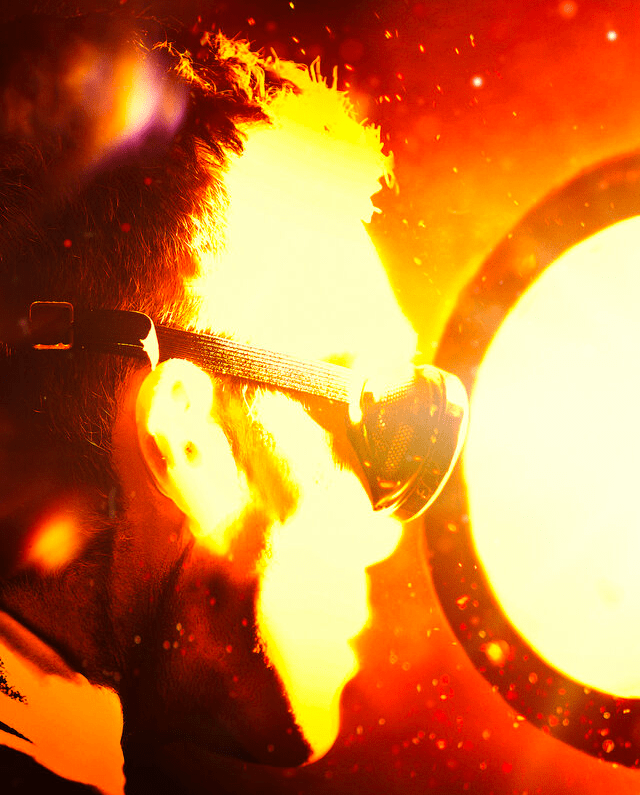
The feeling of this sequence mirrors Oppenheimer’s feelings about building the bomb. The buildup is full of dread and terror, not knowing what the outcome of this work will be, but knowing that is has the potential to destroy the entire world. But the explosion itself brings about what Oppenheimer ultimately wishes it to – peace, if only for a moment. Then the final hit of the shockwave, symbolizing that the peace cannot last, and the echoes of the destruction from the bomb will ring and have to be answered for. This scene is incredibly effective on its face, but I really appreciated the nuance of the scene’s purpose in the movie under the hood.
A noted criticism I have seen comes from what we get after this sequence: another full hour dedicated mostly to two courtroom dramas (okay it’s not a courtroom but sorta-kinda). This stretch has been marked as boring or unnecessary by many reviewers, and if those are your feelings then that’s okay, but I couldn’t have felt differently about the final hour. I found this part to be really engaging because it was the part that I knew the least about. I obviously know what happened with the bomb, but I had no idea what happened to Oppie afterwards. I always assumed he rode off into the sunset, and I had no idea there was such a campaign to sideline him, thus I was really interested to see if and how he could fall from grace and who would stand by him and who would betray him. Maybe if you read the book (American Prometheus: The Triumph and Tragedy of J. Robert Oppenheimer) you wouldn’t have had as much interest in this part, but if that’s you then that’s just what you get for being a NERD.

While I disagree with the critisism that the third hour was boring, this film is certainly not without its flaws. The most egregious of which is what has become a through-line in pretty much all of Nolan’s films: terribly written parts for women. Forget about Nolan’s obsession with dead wives and girlfriends who are littered throughout his filmography and just focus on the two female parts in this film: Emily Blunt’s Kitty and Florence Pugh’s Jean Tatlock. One is either madly in love with Cillian Murphy or so distraught about not being with him that she is driven to madness, while the other is drunk for 90% of the movie until she has a couple of miraculous but unearned triumphant moments near the end of the film. Blunt and Pugh are both great, but they’re not given much to work with in this one, we can do better.
There are other things to complain about: the disorienting editing can distract from the narrative; the sex scenes are 100% unnecessary; the the sound, while effective, is really deafening and uncomfortable at times as pointed out in the top Letterboxd review.

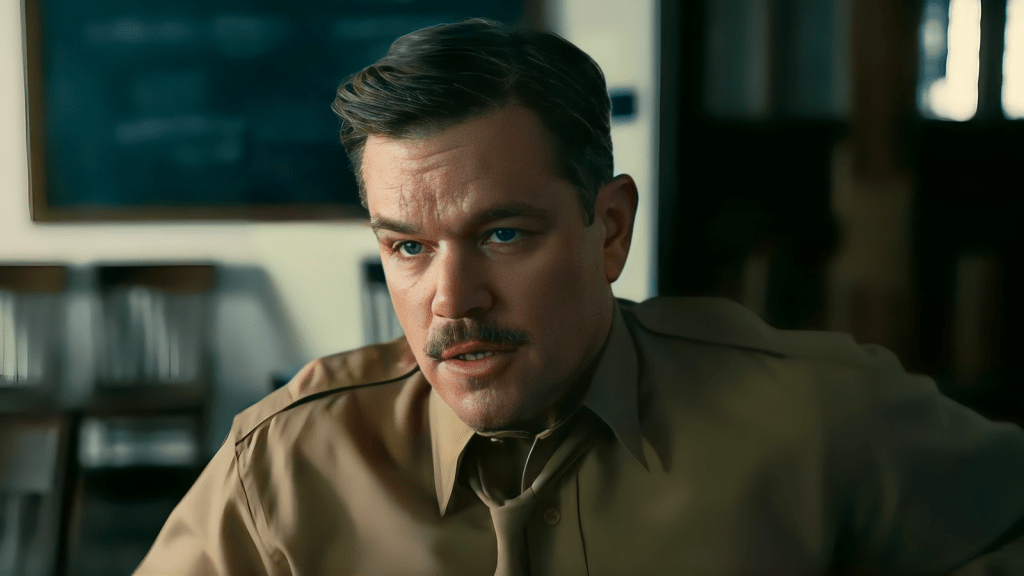
Also, there are other things to praise: Matt Damon is an unsung hero of this movie, giving us an anchor in a relatively uncomplicated likable character; Robert Downey Jr. is fantastic, and it’s really clever how Nolan shifts to black and white to indicate that we are switching to his character’s perspective; the final line of the film is as powerful as anything I’ve seen in a biopic.
In all, I’m sure this movie will sweep the awards, and it’s probably the most interesting biopic in many years. I’m not quite convinced it’s Nolan’s best work ever, but it has a lot to appreciate and I’m glad I spent the 3 hours in the theater, even if it was a nice day.

 Loosely Scripted
Leave a comment