
READINGs: Experimental Cinema: The Film Reader by Wheeler Winston Dixon and Gwendolyn Audrey Foster (Introduction and First Essay)
VIEWINGS: Un Chien Andalou (1929), The Life and Death of 9413, a Hollywood Extra (1928), Manhatta (1921)
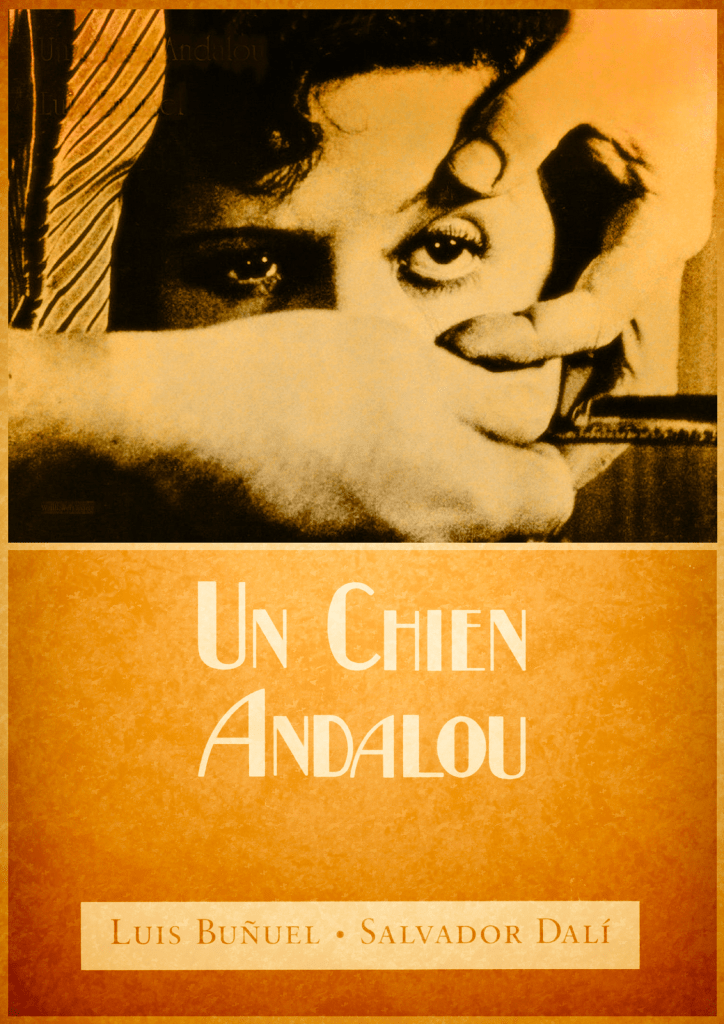
To start, a brief anecdote:
I took a digital photography class in high school (shout out once again to Mrs. Shank). One day the teacher was out sick and we had a sub, who was instructed to tell the class to do some abstract research on an influential artist who lived in our hometown of Dayton Ohio: Jud Yalkut, and write some analysis on his work. Yalkut’s most known work came in the form of a collaboration with the (much more famous) Japanese artist Yayoi Kusama. This work was Kusama’s Self Obliteration (1967) and I watched it in its entirety in my catholic high school classroom at 9 o’clock in the morning on a Tuesday.
It cannot be understated how shocking this film was to myself and my classmates (one of whom had taken it upon themselves to partake in some “extracurriculars” before class that day, I really can’t imagine what that must have been like). Aside from the off putting, eerie tone of the film overall, the content itself was risqué, verging on pornographic. The nudity featured was artful, it was clearly not meant to arouse, but it was meant to provoke, and it provoked a fight or flight response from those of us who watched it that Tuesday morning. I let our teacher know that next time she wants the class to learn about Jud Yalkut, she might want to give a warning about this piece, as it would very likely offend many of the conservative parents who patronized our school. The film remains to this day freely available on YouTube and I still find it quite upsetting to watch (especially the last 5 minutes or so).
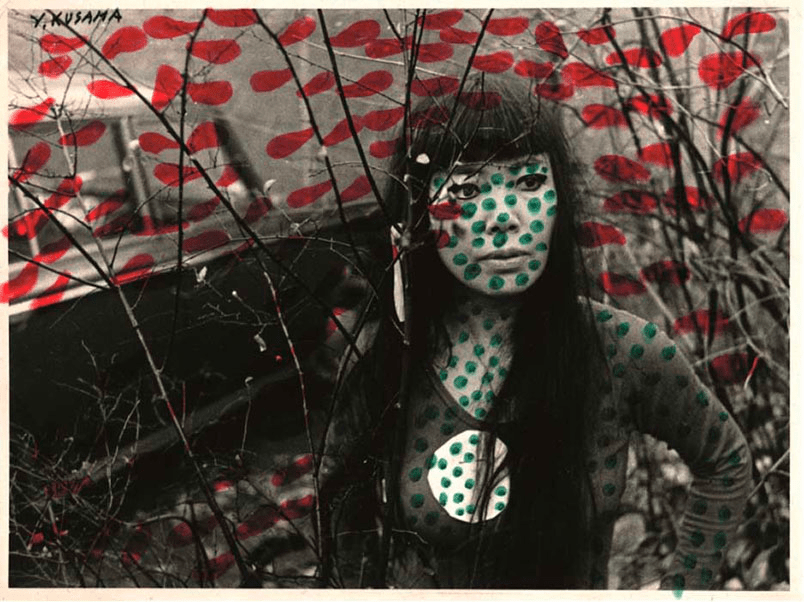
^ the least creepy still from Kusama’s Self Obliteration
It wasn’t until now, some 8 or 9 years later that I would realize that Kusama’s Self Obliteration was actually my first exposure to Experimental Avant-Garde film. It is mentioned, along with Yalkut himself, in the reading for this unit (I was Leo pointing at the TV when I saw the title). For many years I had wondered why anybody would be interested in making (albeit watching) something like Kusama’s Self Obliteration. It certainly doesn’t seem to have any entertainment value, there is no real narrative to be discerned, and you’d have to really stretch the imagination to glean any insight into the film’s purpose for existing at all. Thankfully, having read more about the film movement that led to this film, I think I can at least put its existence into context.
Self Obliteration comes to us during the Experimental film boom of the 1960s. Dixon and Foster dedicate many pages of their Film Reader to describing at length many films made as a part of this movement, which is ostensibly the renaissance of experimental film. While the 60s were where this genre bore the most fruit, it had roots going back to the 1920s, exemplified best by Luis Buñuel and Salvador Dalí’s Un Chien Andalou.
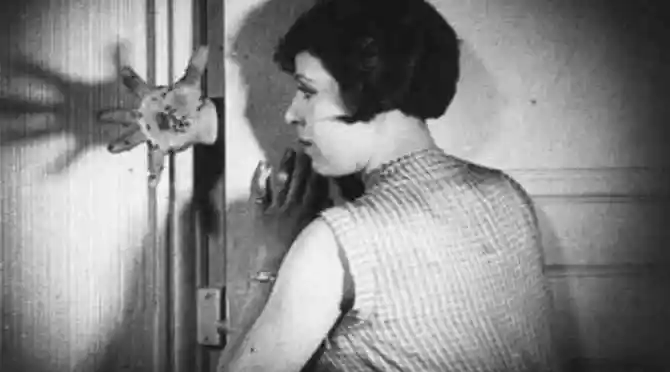
In contrast to Kusama’s Self Obliteration, I found Un Chien Andalou to be an absolutely delightful watch. I can’t quite put my finger on why one of these speaks to me and the other doesn’t (that’s art for ya!), but with Andalou I felt like I was somehow in-on-the-joke that Buñel and Dalí were playing on the audience. The film defies all logic and reason, just when you think you might have a loose grasp of what is going on, something even more outrageous than what you’ve just seen comes out of left field and you have to start over trying to orient yourself in any kind of reality. The filmmakers intentionally defy reason and they denied any theory about the meaning of the film that film theorists and critics proposed. The point of the film is… it has no point. And yet, we look for reason in it anyway! Humans are really bad at accepting that something can exist for no reason, and our brains tend to assign reason where there is none. The experience of watching this film is an exercise in this phenomenon, and I found myself tickled by it. (As an aside, there is a 2010 indie horror-comedy called Rubber that also explores this in a fun way, check it out if you’re so inclined)
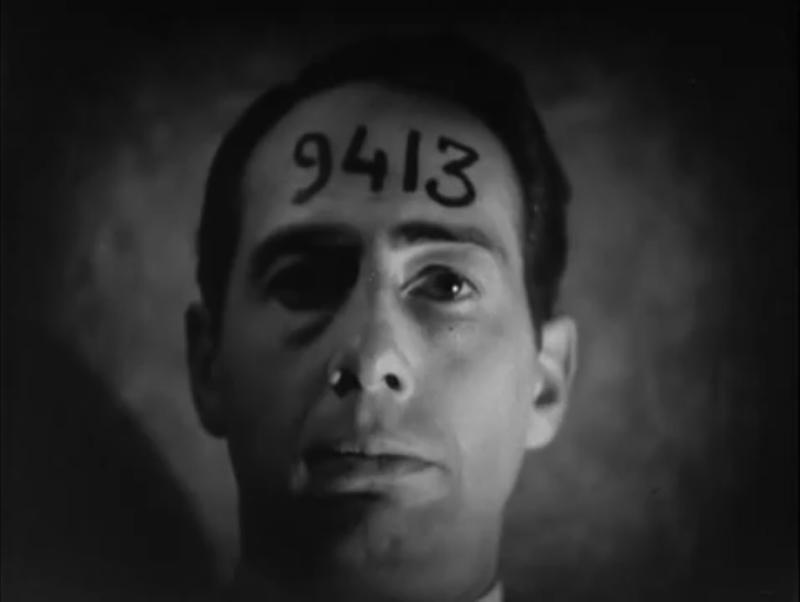
The films in this movement don’t have to be meaningless, and most of them actually aren’t. The Life and Death of 9413: a Hollywood Extra (1928) has a very clear purpose in highlighting the callous and dispassionate treatment of aspiring actors and creators in Hollywood, all the way back in the 20s. It borrows style from the German Expressionist movement (remember? from last time???) and while the symbolism is pretty on-the-nose, it is interesting seeing the gripes of filmmakers wrestling with the Hollywood studio system that still basically operates the same way today.
I was glad that The Film Reader described many of the influential Avant-Garde films of the 60s, because I do think some of them are probably a pretty tough watch. They detailed one film, Wavelength (1967), consisting of a single shot taken from across a large room that slowly zooms in to a window on the other side of the room – for 45 minutes. Some stuff happens when people walk in between long periods of silence with just the zoom, but it’s mostly just the zoom. I think it highlights what it seems to me the Avant-Garde cinema is really about which is artists championing the attitude of ‘just make something!’ It doesn’t have to entertain anybody, or be good, or even make sense! Try it out! Maybe it’ll be great. Sometimes it is, and if it isn’t you’ll be a better person for having tried it. Critics seem to agree that Wavelength is actually enthralling, and I am pretty curious to check it out.
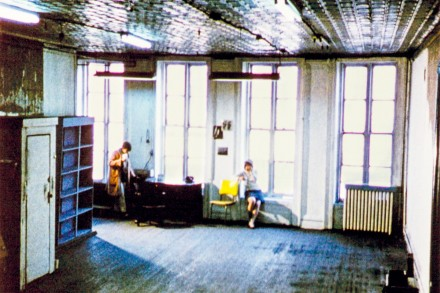
^ still from Wavelength
What I thus found most compelling about the Avant-Garde movement in America was its focus on highlighting amateur filmmakers. The “Filmmakers Cooperative” operating in the 1960’s specifically stated in their bylaws that “anyone could become a member simply by placing his or her films in distribution. There were no censorship or ‘selection’ criteria of any kind, and anyone who had a film to screen was welcomed”. Pretty cool stuff, and allowed not only for new creators to get a foot in the door when it came to making and showing films, but for established artists to get weird with it, and make stuff that didn’t fit into the studio system. Film critic Herman Weinberg said in reference to professional studio filmmaker Robert Florey: “It was only when he was working on his own, after studio hours, with borrowed equipment, scanty film, a volunteer cast and the most elemental of props, that, released from the tenets of the film factories, he was able to truly express himself in cinematic terms.” For my money, this is all the justification you would ever need for the existence and importance of experimental avant-garde film.
That’s all for this unit, I do hope you at least check out Un Chein Andalou, it’s only 20 minutes and it might make you sound cultured at a dinner party one day. The next unit is on The Golden Age of Hollywood which I’m pretty excited about, but I do feel a bit compelled to do a bonus unit on the films of the 1930s, as the current course structure would skip them completely, so you’ll have to wait and see!
 Loosely Scripted
Leave a comment