
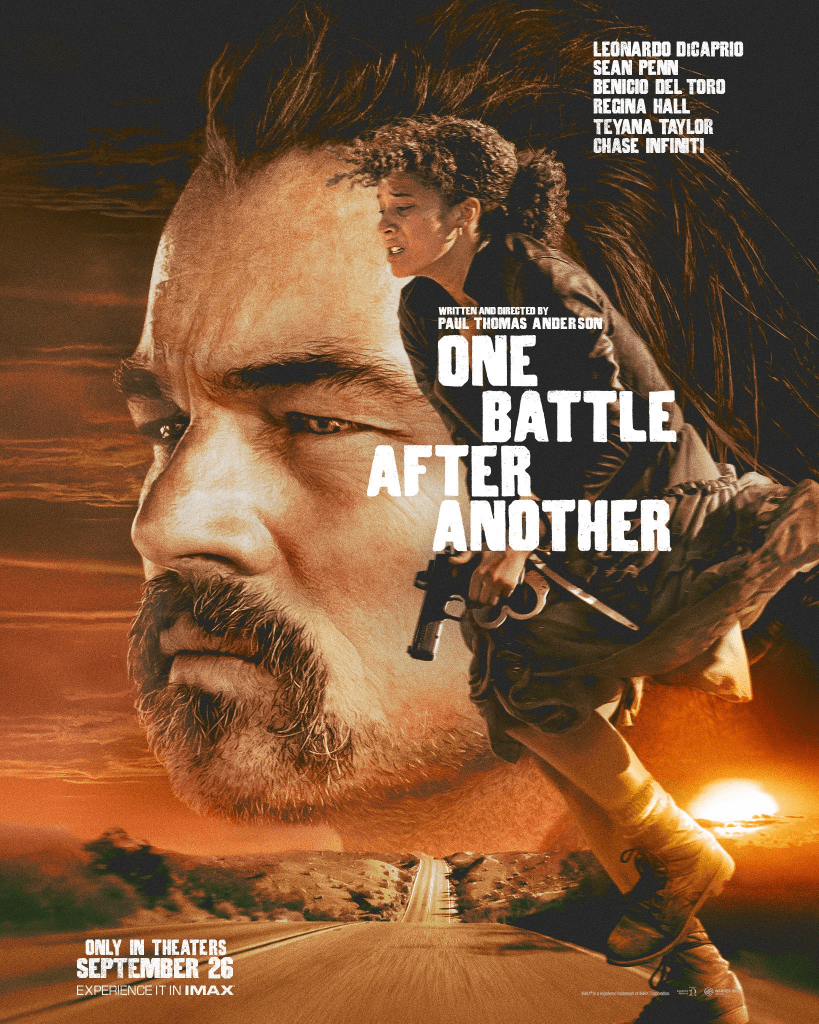
I think it’s shaping up to be a great movie year. Big movies, like Sinners, Weapons, and F1, as well as small ones like Eddington, Sorry Baby, and Materialists (which was actually bigger than I thought at $105M worldwide box office) have all delivered on the promise of their potential to at least a respectable and at best a staggering degree. But the film that seems to be unanimously agreed upon as the arrival of something that will remain with us for decades to come is Paul Thomas Anderson’s One Battle After Another.
I rushed out to see this movie, as I often do, as a solo matinee on its second weekend at my local Alamo Drafthouse (for you format heads, it was projected in standard DCP, the only film projector in DC is like an hour away from me :/). I found one of the only seats left in the theater in the very back row, sandwiched between two couples clearly there on a date (at 2pm?), one of which ordered the buffalo wings which I have to say smelled delicious (that’s neither here nor there, but truthfully it colored my experience as much as anything). I hadn’t read any reviews but I had seen what my Letterboxd community had rated it and here’s what I saw:

So it’s safe to say I knew I was in for something. I sat down ready to have the moviegoing experience of the 2020s, and perhaps that was my mistake. I didn’t leave the theater feeling as triumphant as I hoped I would. There’s a lot to love here, and I’m still coming around on some of the ideas, but there’s something I’m just bumping up against that I’m trying to work out. Let’s get into it together
The good stuff
Performances
I think the immediate wins here are in a pretty unreal set of performances from a cast that was surprisingly deep for a movie billed almost entirely on the face of Leonardo DiCaprio (just look at the poster). I’ll briefly speak on each one:

Sean Penn delivers maybe the best villain performance of the 2020s. He’s scary, he’s really off-putting, he’s so hateable, he’s just the right amount of funny for the movie he’s in.

Chase Infiniti is an unreal discovery. She’s never been in a movie before (she’s done some TV, apparently great on Presumed Innocent) and she’s asked to go toe-to-toe with Leo and Sean Penn, in addition to credibly hold a gun, perform karate, drive in a car chase, etc. She’s brilliant, watch out for her.
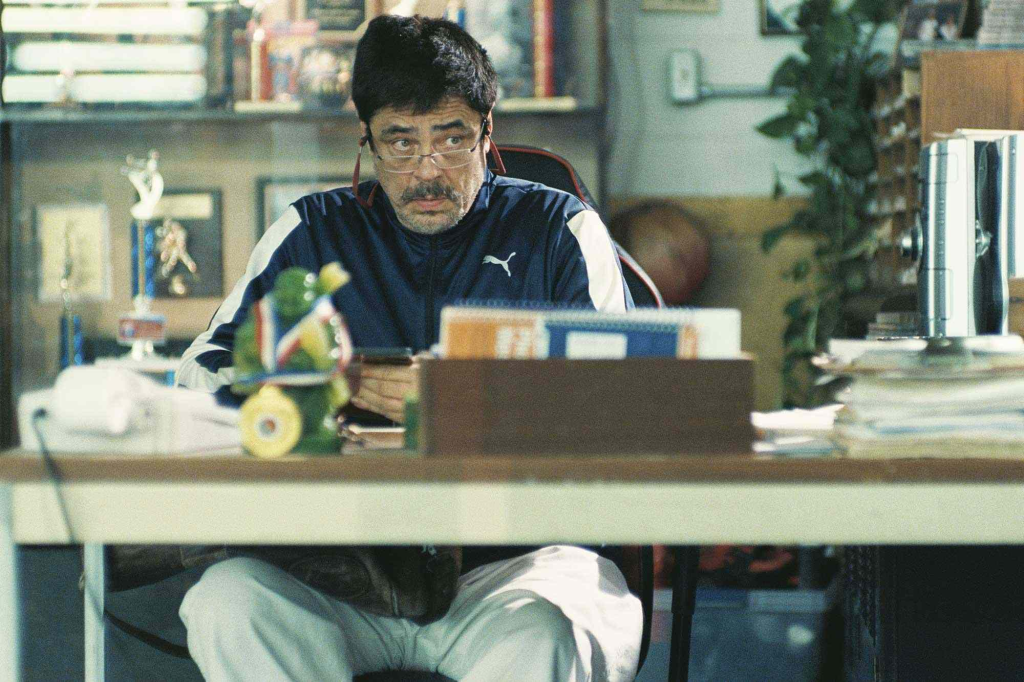
Benicio Del Toro is the heart of the movie for me. As much as we come to feel this wonderful connection between Bob and Willa, it’s Del Toro’s Sensei that makes me finally feel safe and grounded. I just want to kick it with him all day – give me the Sensei spin-off.

Teyana Taylor, who really only appears in the prologue, looms large over the rest of the film. She provides the propulsiveness of those first 40 minutes and orients (or frankly, disorients) us in the chaotic whirlwind of the revolutionary world we start the movie in.

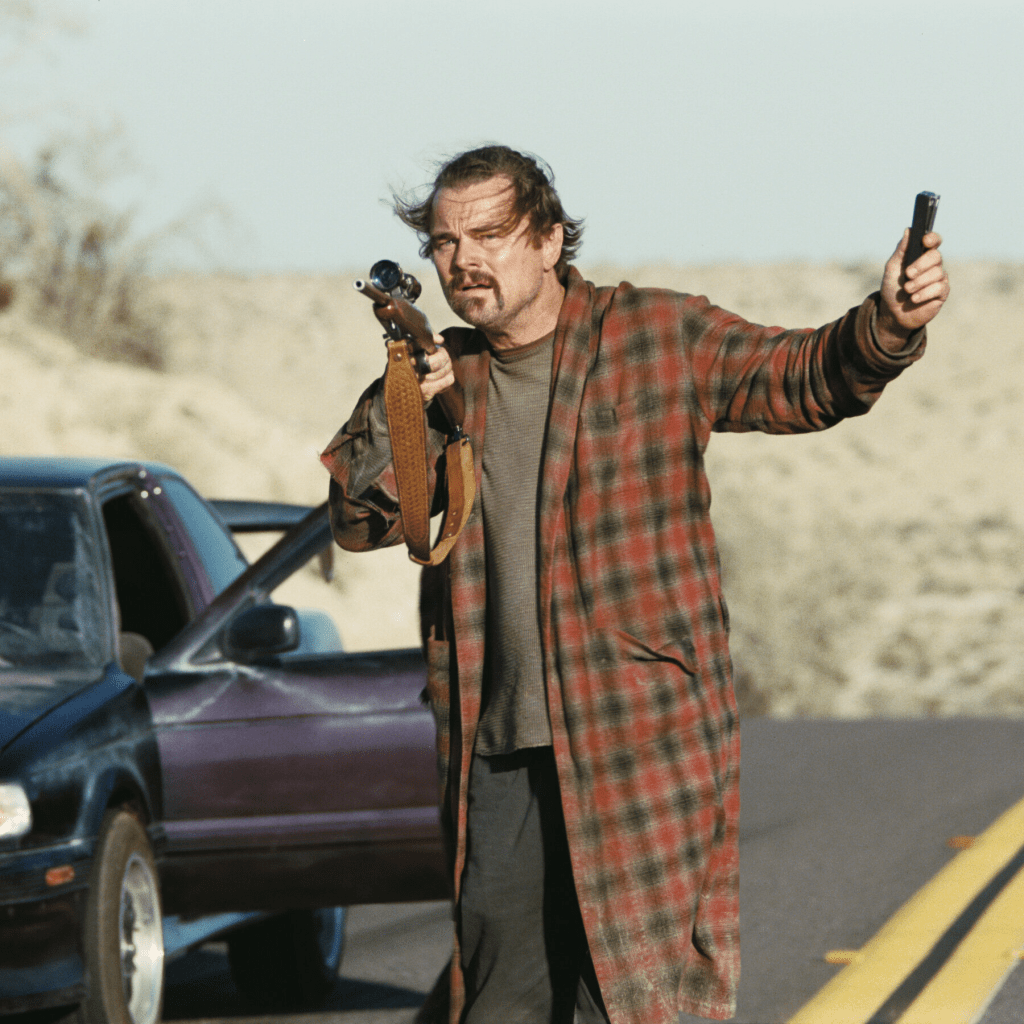
Finally, the poster-man himself, Leo. It’s a very good, very interesting performance, he’s very funny most of the time, but is also doing lots of subtle but powerful inflections that are crucial to our understanding of the relationship between Bob and Willa. One of the more interesting ways to frame the Leo performance here is to look at the roles he’s taken since winning his Oscar for The Revenant (2015). Since then he’s starred in Once Upon a Time in Hollywood (2019), Don’t Look Up (2021), Killers of the Flower Moon (2023), and now One Battle After Another (2025). In each film, he plays a neutered, usually washed up or washing up, anxiety riddled man-child who is manipulated by his environment while desperately trying to be in service to something larger than himself. I won’t psychoanalyze him from my armchair to try to figure out why he seems to be attracted to this type of role, when he could have probably done 10 more years of Jordan Belforts and Jay Gatsbys, but it’s an awfully interesting wrinkle in the career of our biggest working movie star.
Filmmaking
It’s undeniably true that Paul Thomas Anderson is among our greatest working filmmakers. To use a sports analogy, he’s what the broadcasters would refer to as a ‘future hall-of-famer’. He often walks a tightrope between ‘conventionally entertaining’ (Boogie Nights and Licorice Pizza might lean more this way) and ‘mindbogglingly metaphorical’ (The Master and Magnolia lean more this way). His best films strike this balance with grace, never sacrificing one for the other. In One Battle After Another, I think we do get a good mix of both.
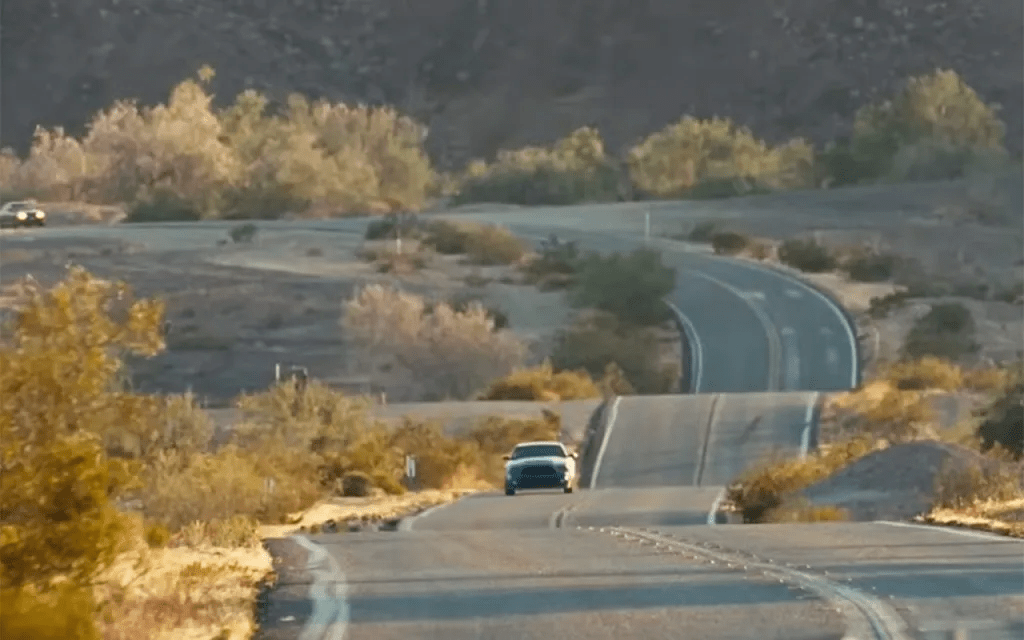
On the conventional side, I think the piece of the movie that shines the most is the car chase near the end of the film. It’s unlike anything I’ve seen in a movie before. I’ve heard it called a “car chase that goes up and down”, which is apt if a little reductive. The way the movie has built the emotional stakes that culminate in this climactic chase is what makes it even more special than it is just from a pure cinematic perspective – that said it stands on its own as an incredible spectacle. This is what people are thinking about when they recommend you see this movie ‘on the biggest screen possible’. It not only delivers but it’s novel enough that I feel quite certain I will see something like this in a movie in 20 years and I’ll go “This is just like One Battle After Another!”
Then of course, while PTA is known for creating great, tense movie imagery like the car chase, he’s also known for his enigmatic, even cryptic storytelling. That flavor of his creeps in here, though this film is planted firmly among his more discernible works. The positioning of the parental figures as failed revolutionaries mirrors a common Gen X sentimentality that sounds loudly in today’s America. They tried to make a difference but for one reason or another (they did too little, too late, not for long enough, not the right way, not directed at the right people, etc., etc.) no real difference was made. A slightly older, more self-assured and self-righteous, more moralistic ruling class ultimately won out and this wave of revolutionaries eventually just got tired and settled into a more comfortable life. Now here they are, less worried about making a difference, but still interested in being on the right side of history, and watching their children take up the fight that they wanted to wage with a hopeful wish that these kids can make the difference they were not able to. As a young millennial this is definitely a theme I can get invested in. All of this wrapped in the typical PTA blend of cinematic anxiety, base humor, farcical horniness, and unconventional action makes for a great moviegoing experience.
There are many others who can (and have) celebrated and articulated this film in more interesting ways than I have above. This movie is credibly posited as a treatise on parenthood (specifically of mixed-race children, which PTA has), as a celebration of black women (such as PTA’s wife, Maya Roudolph) and spotlight of their specific struggles in America, as an allegory for the modern American political sphere and the militarized use of law enforcement on immigrants and other marginalized groups. It is all of these things and probably a lot more. Still I just wasn’t ready to accept this as a runaway modern masterpiece. I’m not really trying to zag on the overwhelming positive response on the movie – I recommend it strongly, I had a great time with it, I’ll surely be pondering it much more in the coming months – but I do suspect some of the gas being poured on this fire is clouded by the immense respect for the filmmaker based on past works. Let me explain.
The Stuff I’m Struggling With
I’ll start with one thing that might be more personal than an objective critique. I’ve noticed a rising trend in movies opening with dizzying montage (looking at you, Oppenheimer) aggressively laying down exposition, or worse yet backstory. To me, this is disorienting, alienating from the characters with whom we’re supposed to be developing a relationship in this part of the story, and ultimately flattens roughly the first half of the film. The style isn’t completely the issue – many films open with fast paced character intros and world-building setup. I just watched PTA’s own Magnolia (1999), which has a similar style in the first 20 minutes, but the difference is that in Magnolia I leave that whirlwind with a great interest in several characters, where at the end of the One Battle After Another prologue, I feel more like “okay so all that happened and now we can get to the story”. It’s not that it’s not entertaining, my issue is that it doesn’t help me feel connected to the characters. All my affection for Bob and Willa comes from stuff that happens after the prologue. I can’t help but wonder if there was a better way to get us to understand the happenings of these characters lives from before this story actually begins.
Then finally comes the chewiest of what I think I’m bumping up against in this movie: the whole “Christmas Adventurers” subplot. What works here is pretty obvious – this subplot provides us with probably the funniest moments in the movie, it helps drive Lockjaw’s motivation, and thematically it paints the evils of fascism and racism and militarized elitism as undeniably goofy and silly and laughable. The invocation of the Christmas holiday I find actually pretty insightful. The only federally recognized religious holiday, Christmas in this context can represent the penetration of a white Anglo-Saxon protestant ethos into the fabric of broader American government/political/military presence. In addition to that you get some fun verbal queues out of it such as “Hail Saint Nick”, aurally mirroring “Hail Satan”, as well as Sean Penn yelling out “I am a Christmas Adventurer! I have a higher calling!” which is just downright funny. So bravo there PTA.

What I think is bothering me about this part of the movie is just how goofy these guys are. Here we have a shadowy cabal of racist dummies who, by virtue of generational wealth and power, descend America into fascism, deporting brown folks and oppressing black folks to further an explicitly ‘whites only’ agenda. I try not to get political on here, so I won’t make this about my personal politics, but rather what PTA is getting at. It’s clear that he’s positioning this cabal alongside the current administration (“lunatics, haters, and punk trash” sounds so much like a Donald Trump tweet I’m actually shocked it isn’t, and the imagery around the immigrant camps and riot police is pretty unmistakable). That makes this very much a movie of and about our time. It may be true that the movie is more interested in the relationship between generations than in diagnosing how things fell apart in America, but a conscious choice was made to set the movie where and how it’s set and this invariably bleeds into how we are going to receive it. My issue then, is that describing this great American fall into fascism – which we cannot help but map onto our lived reality – as the secret master plan of these slapstick powerful racists is reductive. This type of stuff is happening and it is not because of a handful of trust fund yuppies who hate non-white people. It’s a core belief of mine that every person believes they are doing good – and that as a writer it’s your responsibility to remember that when you’re writing your evil characters. Take Daniel Plainview, an undeniably despicable person, who may even have understood his own wickedness, but he at least acknowledges the ‘competition in him’. It’s a character whose motivations come from a very human place, but have spun out of control and driven him to do terrible things. This character is part of the reason why There Will Be Blood is such a powerful allegory for the American way. Then you come to this movie and these characters are simply one dimensionally evil. I don’t have any understanding that they believe what they’re doing is helpful to anyone, really even themselves. Even Lockjaw, who gets a little more dimensionality than the rest of the Christmas Adventurers, seems focused only on being part of this group and aligning himself with these guys’ ideals. If your goal is to highlight the hypocrisy of a movement in American politics – this is failing to state anything meaningful beyond “MAGA bad”. If your goal is to tell a separate story unrelated to the state of affairs in American politics – this is lazy writing. In either case, it just didn’t work for me.
Conclusions
I need to see this movie again. Probably several more times before I can get a full picture of my feelings on it. Ultimately, the very best thing about the movie might be the multitude of conversations it can and has sparked. There is lots and lots of interesting stuff in here that is sometimes fully explored and sometimes leaves the rest to us, the viewers. In the end, it’ll be among my top films of 2025, but I don’t know if I have it as unquestionably among the best of the decade. But as I’ve said before and I’ll say a million more times, art is subjective! If you loved this and you thought the silliness of the Christmas Adventurers just goes to show how silly evilness can be, then I love that for you. I’m interested to see where this lands in my rankings as we get into November/December and we get more awards oriented movies and big family blockbusters coming out – there are many that I’m excited about. Anyway, speaking of being excited, Battlefield 6 is out, so I’ve got one battle after another to fight myself.
 Loosely Scripted
Leave a comment