
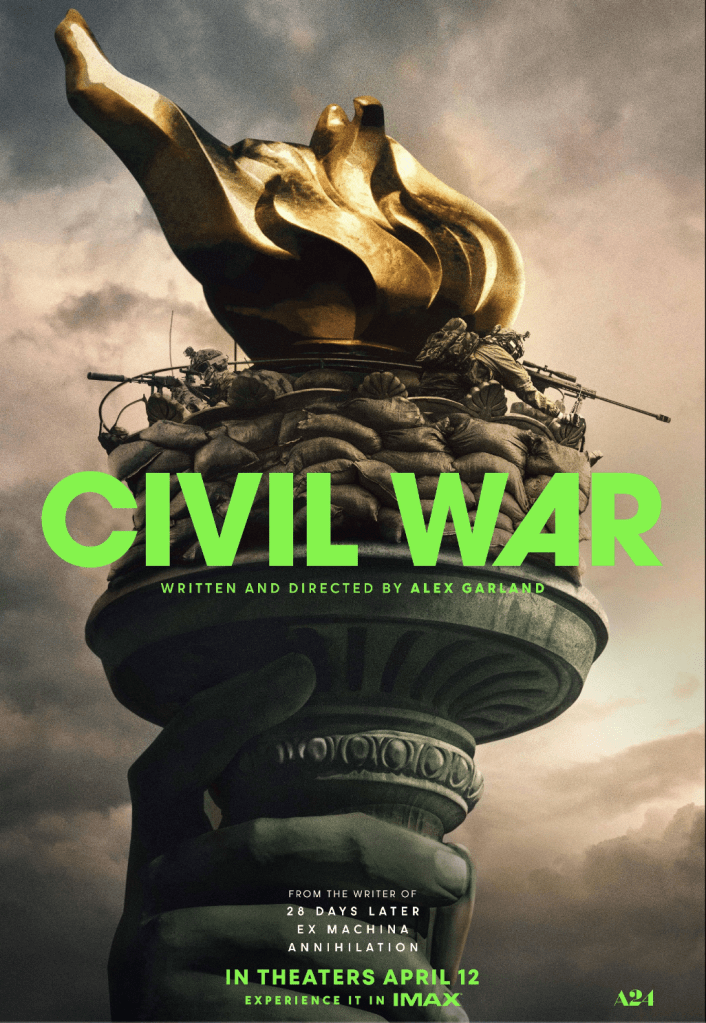
This movie was one of my most anticipated of 2024. Alex Garland, noted filmmaker with something to say, would render what many Americans have considered an outside possibility since circa 2016: the country devolving into civil war. More than anything, I was most curious to see how he would critique the divide between opposing sides of American political issues, a crevasse that has grown wider and deeper than most people can remember ever being before.
Before it was even released, the film came under criticism for joining the states of Texas and California together to form the “Western Forces” that oppose the US federal government in the film. The basic critique was that by joining two of the largest, most extreme left and right leaning states in the union, you’ve removed the possibility of any real discussion of the issues at play in that are dividing the country to the point of civil war. While I think there’s probably some credence to this argument, I actually didn’t take issue with this decision. The movie doesn’t have to be about how people were so staunchly dug in on abortion, or gun control, or tax law that they started killing each other. The version of this movie that preaches the political opinions of a specific camp (whether I or you or audiences in general agree with those stances or not), is a terrible, terrible movie that I would probably not be interested in seeing. I’m not interested in what Alex Garland thinks about how we should approach countering terrorism, but I was very curious to see what he would have to say about the firmness of stances on both sides and how they escalate into conflict when we don’t reconcile our different opinions.

To my dismay I did get to see him say much of anything about this concept. Critics of this movie declare in unison: “This movie has nothing to say at all”. Though I don’t 100% agree with that statement, my disappointment with the movie indeed was that I thought they had a real opportunity to say something insightful and instead what we got was an exceptionally well made action movie about photojournalism. It’s not what I came for!
The movie does, at times, venture into the territory of social commentary to varying degrees of effectiveness. When our troupe of journalists stumbles upon a town seemingly untouched by the war, Garland attempts a jab at those who ‘stay out of politics’, portraying them as aloof, sheltered, and privileged before revealing that they are only so privileged because of the militant defenders watching (over) them. In one of the most effective scenes in the movie, we encounter a sniper and his spotter who is only able to sum up the conflict thusly: “Someone’s trying to kill us, we’re trying to kill them,” forcing the audience to consider the motivation of survival as a driver of the conflict. Maybe the aggressors were only so aggressive because they had to be to stay alive, an analogy for the feelings of many effected Americans about key political issues – “this isn’t just a political bargaining chip, my life is on the line!” Lastly, in what was probably the most intense but also the most wrought scene in the episodic second act, we get Jesse Plemmons’ homicidal maniac asking “What kind of American are you?” to our heroes before killing those he deemed not American enough. In all of these scenes (but especially that last one), we see Garland trying to sneak through some social commentary, though the metaphors are not exactly the most nuanced of his career, and the statements they make aren’t particularly profound.

What redeems this movie from the complex issues of the writing is the exceptional filmmaking. The feeling of driving through a war torn America and the intense battle sequences intercut with really awesome war photography is deliciously intense throughout the film and comes to a natural peak in the climax. The final 20 minutes showcasing the siege on DC is truly some of the most captivating action I’ve seen on screen in years. I was riveted, thrilled, jacked up even. For all my complaints about the movie, the visceral reaction I had to the action sequences is to be commended. It’s particularly interesting to note at this point that Alex Garland has stated that he plans to take a break from directing films at this time, preferring to focus on writing instead. From this movie alone (and reports from some of his other recent projects like Men), I would venture to say that his skills as a director are on the upswing right now, while his writing seems much more fraught today than it did when he was writing the likes of Ex Machina. Bold move, we’ll see how it works out for him.
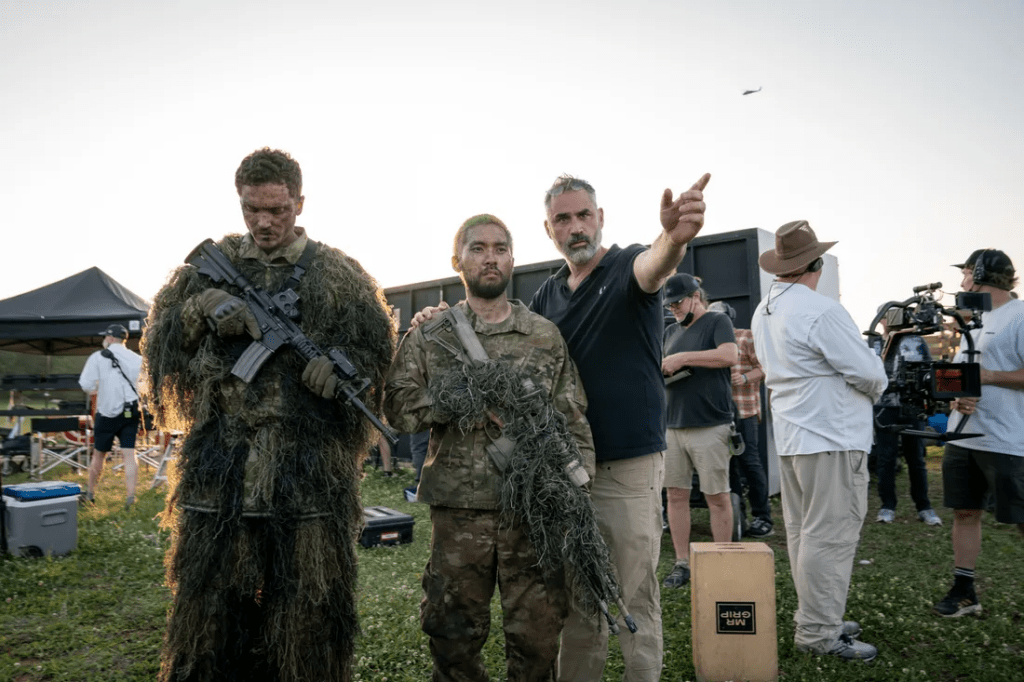
Now I can hear the backlash to my objections about the film: “Why does this movie have to say something insightful at all? Not every movie has to be Citizen Kane, why can’t this just be a good, well made war movie?” To which I say “You’ve got a point!” Sure this can probably just exist as a cool piece of action filmmaking that will be borrowed from and remembered fondly by those of us who had the pleasure of experiencing in the theater. However I will make one counter: this could have been a cool movie about war photographers in a fictional war between fictional nations, or set during a previous war, or a war in the far future. A choice was made to tell this story amid a civil war in present day America, which is inevitably going to spur an expectation of commentary on this division in the country. As far as I can see, this decision would only be made for one of two reasons, either it’s a marketing move because the topic will invoke a reaction, or he wanted to say something about this specific time and circumstance. If it’s the former, that’s lame and exploitative, if it’s the latter, I’d say the film was hardly a smashing success in achieving what it set out to do. On the other hand, Garland seemed to infer in interviews that his goal was to get people talking and here I am talking about it, so maybe he’s further ahead than I give him credit for.

 Loosely Scripted
Leave a reply to What the 2025 Oscar Nominations Missed – Loosely Scripted Cancel reply